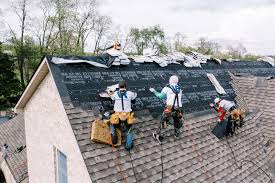
Installation
Roof ventilation is important to avoid moisture buildup, regulate temperature and energy costs, and extend the life of the shingles. Soffit vents, gable vents, and ridge vents are available in a variety of styles to match the appearance of your roof. Adding hip and ridge shingles provides an attractive finish to the roof and adds extra protection against weather elements.
Some types of roofing require the installation of metal flashing, which provides a seal around chimneys, valleys and areas where roof planes meet. It’s important to use flashing that matches the existing roof so that it looks seamless.
Curt's team installs and repairs residential roofs. A typical day starts with safety meetings and may include a walk-through of the finished product with customers.
Once the underlayment is in place, the roofer will install a row of shingles over it. The shingles are then secured with an adhesive starter strip and nails or staples. Roofers will often use an air compressor and a nail gun for faster installation, but some prefer to use a hammer. They will also add in any necessary vents or ridge caps.
Maintenance
Whether it’s time for a roof replacement or a new roof installation, there are many factors to consider including appearance, longevity and material costs. The style of your home’s architecture will impact the roofing style that works best. Cost is a significant consideration as well, since 40% of the total project cost comes from labor and materials.
A sturdy, attractive roof is one of the most important features of any home. It protects against the elements and keeps moisture out, thereby enhancing indoor comfort. It also adds to the value of a property. However, a roof can only hold up to so much wear and tear before it needs to be replaced. That is why it is important to understand the different roofing materials before investing in a new roof or even a repair job.
Roofing is a complex system that protects buildings against rain, snow, sunlight, and wind. Historically, roofs have been constructed in a wide variety of forms-flat, pitched, vaulted, domed or in combinations as dictated by technical, economic, and aesthetic considerations. In all cases, the goal is to provide a weather-resistant surface.
Metal roofs can offer a sleek, contemporary look to a home while offering durability and energy efficiency. They are easy to maintain and can withstand extreme weather conditions. For those concerned about the environmental impact, there are also options for solar panels or reflective shingles that help reduce the amount of heat that is transferred to the living space below.
Some homeowners choose to cover up leaks by re-roofing, which involves nailing a new layer of shingles or another material on top of an existing one. However, this is only a temporary fix and doesn’t address any leaks or underlying damages that may still be present. Plus, covering up a damaged roof will just kick the problem down the road.
In cold climates, roof leaks often happen along the eaves due to ice damming. Adding ridge vents and vented soffits helps prevent this problem. Metal roofs are long-lasting, energy efficient and attractive. They are lightweight and come in a variety of colors and styles.
The first step is to select the appropriate roofing materials for your home. A professional roofing contractor will help you choose from the wide range of roofing styles, colors and materials available. He or she will also discuss the pros and cons of each option based on your budget, climate, aesthetic preferences, home structure and other factors.
Whether you choose to DIY or hire professionals, roofing is a meticulous process that demands attention to detail. A quality roof protects the structure and interior from rain, snow, sunlight, and wind. The roof can also enhance the curb appeal of a home and increase its value.
The roof plays a crucial role in the structural integrity of any building. Timely repairs can address issues such as leaks, sagging areas, and cracks that can compromise the stability of the structure over time. By preventing these problems from worsening, homeowners can avoid the costs of structural damage and other costly disasters down the road.
The most common roofing material is asphalt shingles. This is because they offer a good balance of performance and initial cost. Other popular options include clay or metal, which offer a more distinctive aesthetic and last longer but require specialized installation skills. Moreover, they tend to be quite expensive.
Many people who work in the roofing industry are contractors and may own their own business or work for a larger company as a supervisor or team leader. In addition to working with customers and other employees, these individuals are responsible for managing supplies, equipment and scheduling. They must negotiate prices with suppliers, choose which tools to purchase or rent and decide which workers should go out on a particular job. Additionally, they must deal with accounting matters such as payroll and taxes. Most roofing companies offer competitive salaries and room to grow into supervisory positions. Those who are interested in becoming roofers can start their careers by applying to local roofing companies and working with experienced mentors as they gain knowledge of the business.
Roof installation begins with underlayment and shingles. A contractor will start by unfurling a layer of underlayment over the surface and securing it with a nail gun or stapler. He will then overlap the next row of underlayment and secure it with a nail gun as well. The pattern continues until the roof ridge is reached. The final step is to apply a final layer of underlayment and seal it with roofing caulk to make sure that it’s watertight.
Rubber is an alternative to traditional roofing materials that offers durability and resistance to extreme weather conditions. It is also affordable but may not be as aesthetically pleasing as other materials, such as slate or wood. It is, however, an environmentally friendly option and has the ability to mimic the appearance of other roof types with a few design modifications.
The crew that performs your maintenance program will be provided to you with a roster which you can run background checks on if you wish. This roster will be made up of employees who are insured, bonded and have received safety training.
Repairs
All too often, roof system problems are discovered after leaking or other serious damage occurs. Periodic (twice-a-year) inspections often can uncover cracked, warped or missing shingles; loose seams and deteriorated flashings; excessive surface granules accumulating in the gutters or downspouts; and other visible signs of roof system problems. Indoors, look for cracked paint, discolored plasterboard and peeling wallpaper as signs of damaged roof areas.
You have two basic options: You can choose a complete replacement of the roof system, involving a tear-off of your existing roof system, or re-cover the existing roof system, involving only the installation of a new roof system. If you've already had one re-cover installed on your original roof system, check with a professional roofing contractor. In many instances, building code requirements allow no more than one roof system re-cover before a complete replacement is necessary.
Not necessarily. Leaks can result from flashings that have come loose or a section of the roof system being damaged. A complete roof system failure, however, generally is irreversible and a result of improper installation or choice of materials or the roof system installation is inappropriate for the home or building.
Most work should not be done yourself. Professional roofing contractors are trained to safely and efficiently repair or replace roof systems. You can damage your roof system by using improper roofing techniques and severely injure yourself by falling off or through the roof.
Most new roof systems are designed to provide useful service for about 20 years. Some roof system types, such as slate, clay tile and certain metal (e.g., copper) systems, can last longer.
The price of a new roof system varies widely, depending on such things as the materials selected, contractor doing the work, home or building, location of the home or building, local labor rates and time of year. To get a good idea of price for your roof system, get three or four proposals from reputable contractors in your area. Keep in mind that price is only one factor, and it must be balanced with the quality of the materials and workmanship.